
Rocking meditation: A gentle breathwork practice to calm the nervous system
In today’s fast-paced world, many of us are searching for simple ways to reduce stress, improve breathing, and reconnect with our bodies. Rocking meditation is a gentle yet powerful practice that combines rhythmic movement with mindful breathing to promote relaxation and emotional balance.
Unlike traditional meditation, which often requires stillness, rocking meditation introduces soft, repetitive movement that helps calm the nervous system and bring awareness to the breath.
Practices like this are increasingly used in breathwork and mindfulness sessions, including those taught by Alan Ball, founder of Breatherapy, where breath-focused techniques are used to support relaxation, wellbeing, and stress reduction.
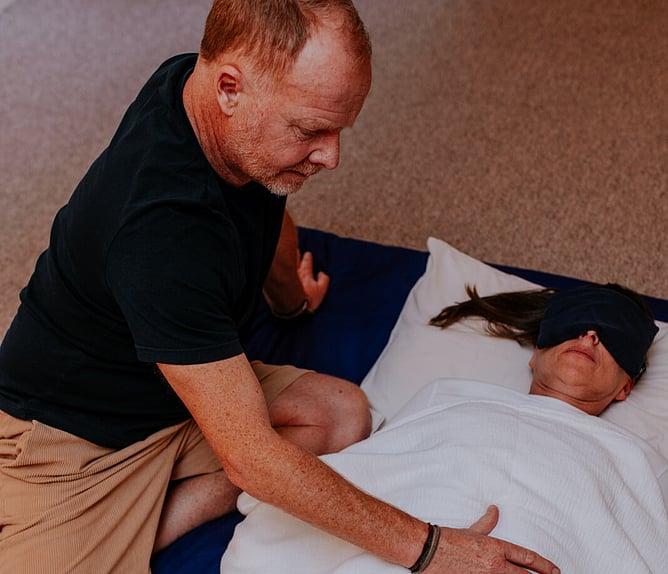
What is rocking meditation?
Rocking meditation is a form of moving meditation where the body gently rocks forward and backward or side to side while maintaining awareness of breathing and body sensations.
The motion is slow and rhythmic, allowing the body and mind to gradually settle into a calm, natural state. This technique can be practiced while:
Sitting in a chair
Sitting cross-legged on the floor
Using a meditation cushion
Sitting on an exercise ball
The goal is not to force the breath but to allow the body’s movement to guide a deeper breathing rhythm.
Because the movement is repetitive and soothing, rocking meditation can help quiet mental chatter and make meditation easier for beginners.

The science behind rocking meditation and the nervous system
Rocking movements naturally stimulate the vestibular system, which plays a role in balance and spatial awareness. Gentle rhythmic movement also activates the parasympathetic nervous system, often referred to as the body’s “rest and digest” system.
When this system is activated, several beneficial changes occur:
Heart rate slows
Breathing deepens
Muscle tension decreases
Stress hormones are reduced
This is why rocking is instinctively used to soothe babies and why many people naturally sway or rock when trying to relax.
In meditation, this movement can help people transition out of the fight-or-flight response and into a more relaxed state of awareness.
Rocking meditation and breathwork
Breathing patterns often reflect our emotional state. Stress, anxiety, and tension tend to create shallow, rapid breathing, while calm states encourage slower, deeper breaths.
Rocking meditation naturally supports breath awareness, making it an effective gateway into breathwork practices.
As Alan explains, "Gentle movement can help people reconnect with their natural breathing rhythm before exploring deeper breathwork techniques."
Through his sessions offered on breatherapy.co.uk, you can learn how simple breathing exercises and body awareness practices can support wellbeing, relaxation, and emotional balance.
This combination of movement, breath awareness, and mindfulness makes rocking meditation particularly accessible for beginners who may find traditional meditation challenging.

Benefits of rocking meditation
Regular practice of rocking meditation can support both physical and mental wellbeing and we list them here:
Reduces stress and anxiety
The rhythmic movement helps calm the nervous system and reduce stress responses.
Encourages deeper breathing
Rocking naturally synchronises with the breath, promoting slower, deeper breathing.
Improves mindfulness
Focusing on movement and breath brings attention into the present moment.
Supports emotional regulation
Gentle movement can help release tension and promote a sense of safety and calm.
Makes meditation easier for beginners
Many people find movement-based meditation easier than sitting completely still.

How to practice rocking meditation
Rocking meditation is simple and requires no special equipment.
1. Sit comfortably
Sit upright in a chair or on the floor with your spine relaxed but straight.
2. Start gentle movement
Begin rocking slowly forward and backward or side to side.
3. Notice your breathing
Allow your breath to flow naturally without forcing it.
4. Let movement and breath sync
Over time, your rocking rhythm and breathing may begin to align naturally.
5. Stay present
If your mind wanders, gently return your attention to the sensation of rocking and breathing.
Start with 5–10 minutes per day, gradually increasing as the practice becomes more comfortable.
Go to this page, to discover Alan's approach to rocking meditation.

Why rocking meditation works in modern life
Modern lifestyles often keep the nervous system in a constant state of stimulation. Work stress, digital overload, and fast-paced routines can make it difficult to relax.
Practices like rocking meditation provide a simple and natural way to reset the body.
By combining gentle movement with breathing awareness, the practice helps restore balance between the body and mind.
Final thoughts
Rocking meditation is a simple yet powerful way to cultivate relaxation, awareness, and deeper breathing. Its gentle movement makes meditation more accessible while still delivering many of the same benefits as traditional mindfulness practices.
By reconnecting with the rhythm of our bodies and breath, we can create moments of calm in even the busiest days.
For those interested in exploring breath-focused wellbeing practices further, the work of Alan Ball at Breatherapy offers practical techniques designed to help people reconnect with their breath and improve overall wellbeing.
More information about these sessions and breathing techniques can be found at Breatherapy - rocking meditation.
You can also contact Alan Ball and find out more about his work.